LOGO

Les 7 bonnes pratiques dans la création d’une Eau de parfum en Private Label

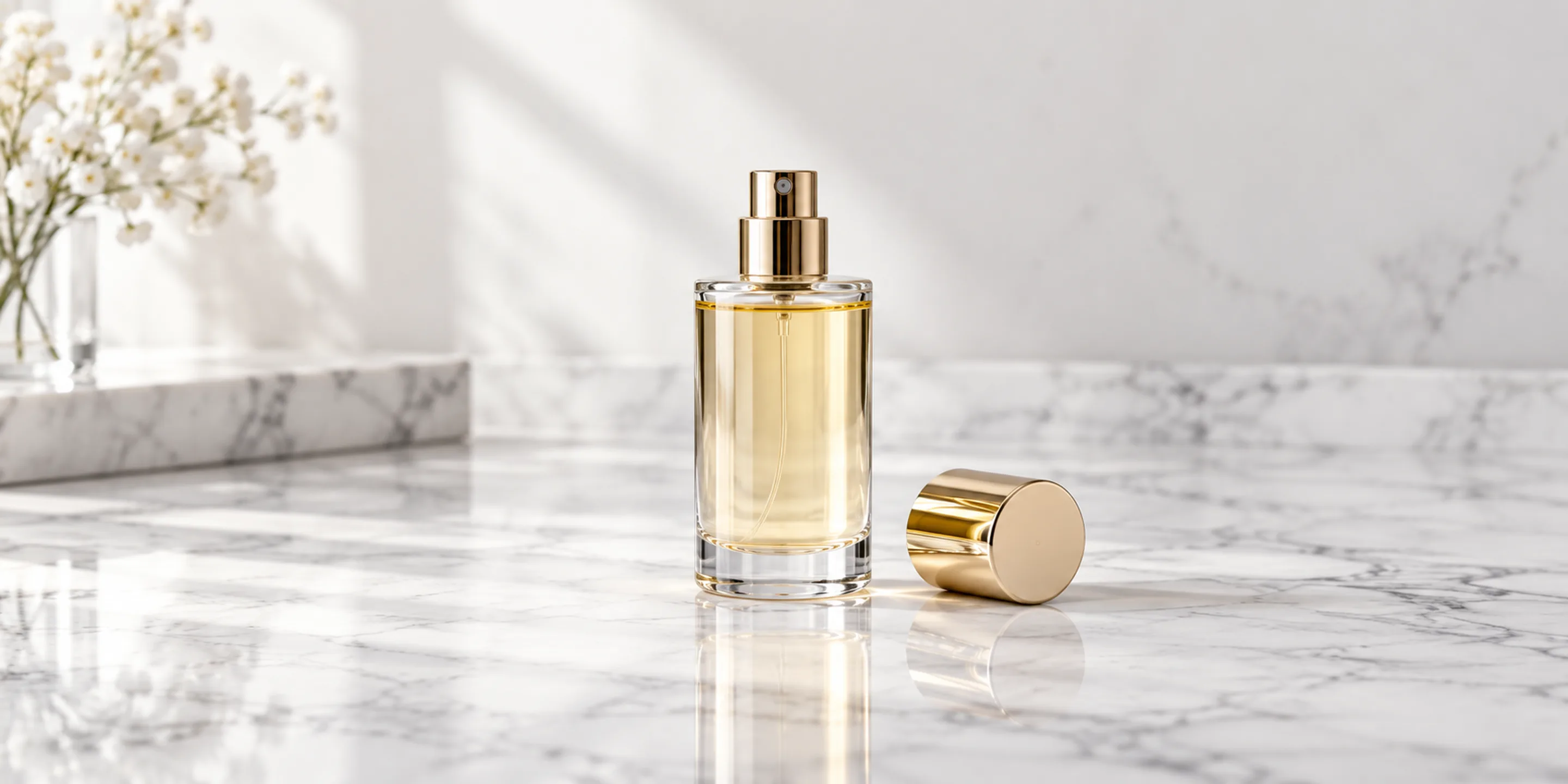
EDP ref713 50ml with ref1000 gold cap(1)

7 Best Practices for Creating a Private Label Eau de Parfum

Developing a private label Eau de Parfum involves more than just choosing the fragrance itself. Behind every successful launch lies a precise methodology and seamless coordination between creation, regulatory compliance, production, and marketing.

Whether you are a new brand, a concept store, a hotel, a spa, or a retailer, this article outlines the key steps, technical constraints, and timelines involved in turning your idea into a market-ready product.

1. Define a clear and distinctive concept

Before fragrance development even begins, it is essential to define your brand positioning and identity.

Your Eau de Parfum needs to tell a story; here are a few questions to help guide you:
– Who is your product for? Who is your target audience?
– Do you want a premium, niche, lifestyle, or minimalist identity?
– What is your desired design (bottle type, volume, packaging, etc.)?
– What will your distribution channels be?

Develop your fragrance brief in alignment with the concept. The more precise the brief, the more likely the perfumer is to propose a creation that truly reflects your identity:
– What emotion do you want to convey?
– What is the olfactory family of the perfume ?
The 7 major olfactory families of fine perfumery : 
• The woody
• The amber
• The leathers 
• The chypre
• The ferns 
• The citrus
• The floral
– What are the desired dominant notes?
Top notes: the most volatile (citrus, hesperidic)
Heart notes: those that define the identity and generally last longer (florals, spices, aromatic herbs)
Base notes: the most long-lasting (woody, amber)
– What fragrance concentration are you aiming for? 
Eau de Cologne: 2–5%
Eau de Toilette: 5–15%
Eau de Parfum: 15–25%
Extrait de Parfum: 25–40%
– Your target audience (the target guides the fragrance family: fresh and marine notes for a sporty scent, floral and fruity to evoke femininity, gourmand for a youthful appeal, spicy notes for added character, etc.)
– Your brand identity (a mood board helps the perfumer visualize your image)
– Olfactory inspirations and market references (to translate words into scents)

An incomplete brief can lead to multiple rounds of revisions with the perfumer, extending the development timeline.
All our fragrances are created by perfumers from Grasse, the world capital of perfumery.

💡 TIP :
Feel free to provide a detailed fragrance brief so the perfumer can translate your expectations into a scent. A fragrance brief is more than just a list of ingredients; it should serve as a source of inspiration and guide the perfumer. Experts are there to translate the client’s ideas using the specific vocabulary of the fragrance industry.
If you have any doubts, do not hesitate to seek outside opinions.

2. Identify your markets and anticipate regulations

A project entails different constraints depending on the region where it will be sold.

At Bougie et Senteur, we always ensure compliance with the European Cosmetics Regulation (EC 1223/2009). If you wish to distribute your product in other geographic regions, it is crucial to specify this from the outset to ensure compliance. To market products in Europe, several elements are mandatory:
• IFRA compliance
• Product Information File (PIF) — Parts A and B
• Stability tests (3 months):  During the stability test, one bottle is placed in an oven at 42°C to simulate aging (1 month in the oven is equivalent to 7 months at ambient temperature). Another is kept at ambient temperature. This process assesses whether the fragrance remains stable or oxidizes, in terms of both scent and appearance (color change).
• Regulatory labeling in the language(s) of the countries where the product is distributed
• Mandatory pictogram: the flame symbol is required for EDP because they contain alcohol, which is flammable
• PAO (Period After Opening): 12 or 24 months; this may vary depending on stability test results
• List of allergens
• CPNP notification (client’s responsibility)
• Traceability and batch number
• Good Manufacturing Practices (GMP)

Cosmetic regulations are often underestimated, which is why we handle this entire aspect to simplify the process for you.

EDP ref716 100ml with ref1005 gold large cap
EDP ref503 100ml with ref1107 matte black large cap and pump open

3. Establishing a realistic budget

The budget for a perfume project depends on numerous factors:
– Fragrance creation and concentration
– Rarity of the raw materials in the concentrate
– The bottle and its decoration (lacquering, screen printing, label, pump, pump collar, cap, etc.)
– Outer packaging and printing specifications (hot stamping, lamination, varnish, paper type, etc.)
– Regulatory tests (stability and skin testing)
– Production and delivery

A standard bottle with simple customization will not incur the same costs as a bespoke development. Setting a realistic budget from the start helps guide technical and creative choices effectively.

💡TIPS : 
To optimize costs, we recommend:
• Choosing one of our existing scents: Reduces regulatory costs by 50%
• Opting for the same lacquer finish for all product variants, and differentiating them through customization (different caps, screen printing, or labels)
• Printing the labels and boxes for different variants at the same time
This allows for economies of scale!

4. Plan a precise timeline

Creating an Eau de Parfum takes time: it is one of the perfumed products with the longest development cycles, particularly due to mandatory testing phases.

Steps to include in your project schedule:
1. Preparing and sending the fragrance brief
2. Developing proposals from the perfumer
3. Selecting primary and secondary packaging
4. Sampling and validation phase
5. Stability testing (conducted in-house at Bougie et Senteur; 3-month duration) and skin testing (1-month duration)
6. Sourcing and printing (bottles, caps, packaging, etc.)
7. Maceration of the fragrance in alcohol (2 to 3 weeks) to ensure finished product quality
8. Filling, packaging and delivery

💡TIP:
A project involving a bespoke fragrance can take up to 12 months, depending on the level of customization and the number of iterations. For faster projects, our White Label offer features 23 pre-selected fragrances that have already passed stability tests, reducing the development time to 4 months.

machine 3
Gemini Generated Image qxfd2jqxfd2jqxfd

5. Choose the bottle, decoration, and packaging

Packaging plays a decisive role in how the product is perceived. The choice of bottle and its accessories (pump, pump collar, cap) must take into account aesthetics, industrial feasibility, and compatibility with filling lines.
In niche perfumery, brands often use so-called “standard” bottles. They then differentiate themselves through decoration, the cap, and so on.

Available customization techniques:
– Screen printing and hot stamping
– Lacquering
– Printed label (with or without digital gold foil, choice of paper, varnish, etc.)
– Printed individual packaging

💡TIP:
An Eau de Parfum project involves many stakeholders : bottle supplier, decorators, perfumer, printer, and manufacturer. It is essential to anticipate the MOQs (Minimum Order Quantities) and lead times for each one. To simplify the process, Bougie et Senteur offers a turnkey solution: we act as your single point of contact and manage relationships with all intermediaries.

6. Plan logistics in advance

Logistics are often addressed late in the process, even though they directly impact costs, lead times, and stock availability.

Points to anticipate:
– Storage
– Transport of dangerous goods due to alcohol content (specific labeling for cartons and pallets)
– Preferred transport method: road, sea, or air
– Required documentation and labeling

At Bougie et Senteur, all shipments are made to a single address on Euro pallets to ensure optimal product protection throughout transit.

7. Implement an effective launch strategy

A successful launch relies as much on the brand experience as on the quality of the product itself.
Before going to market, prepare:
– Storytelling and social media strategy (selling perfume exclusively online presents a challenge)
– Sales materials and sales staff training: ensuring the sales team can discuss top, middle, and base notes, and describe the fragrance and its key notes.
– Samples, testers, and discovery sets

Comprehensive Checklist: Key Steps for a Private Label Eau de Parfum Project

Phase 1: Project Definition
☐ Define the brand concept and price positioning
☐ Identify distribution markets
☐ Define estimated volumes and establish the overall budget

Phase 2: Fragrance Development
☐ Draft the fragrance brief and define olfactory families
☐ Select reference scents for inspiration
☐ Test the fragrance (on blotters, skin, and with a test panel)
☐ Approve the final fragrance

Phase 3: Packaging Development
☐ Select the bottle, pump, pump collar, and cap
☐ Define the product design and approve the artwork/decor (proof)
☐ Develop the carton design and approve the proof

Phase 4: Regulatory and Quality
Ensure the manufacturer has:
☐ Verified IFRA compliance and allergen content
☐ Conducted stability testing
☐ Prepared the Product Information File (PIF)
☐ Labeled the product in accordance with regulations (required information for bottle and carton)
☐ Adhered to Good Manufacturing Practices (GMP)

CONFIEZ-NOUS LA FABRICATION DE VOS EAUX DE TOILETTE

spray 100ml 50ml ref.509 ref.510 with caps ref.1015 ref.1016 1

Optez pour le full service : large choix de flacons et capots, parfums de Grasse en collection ou sur-mesure et fabrication française.

Nous sommes a votre ecoute >

Solid perfumes: an ecological and practical alternative

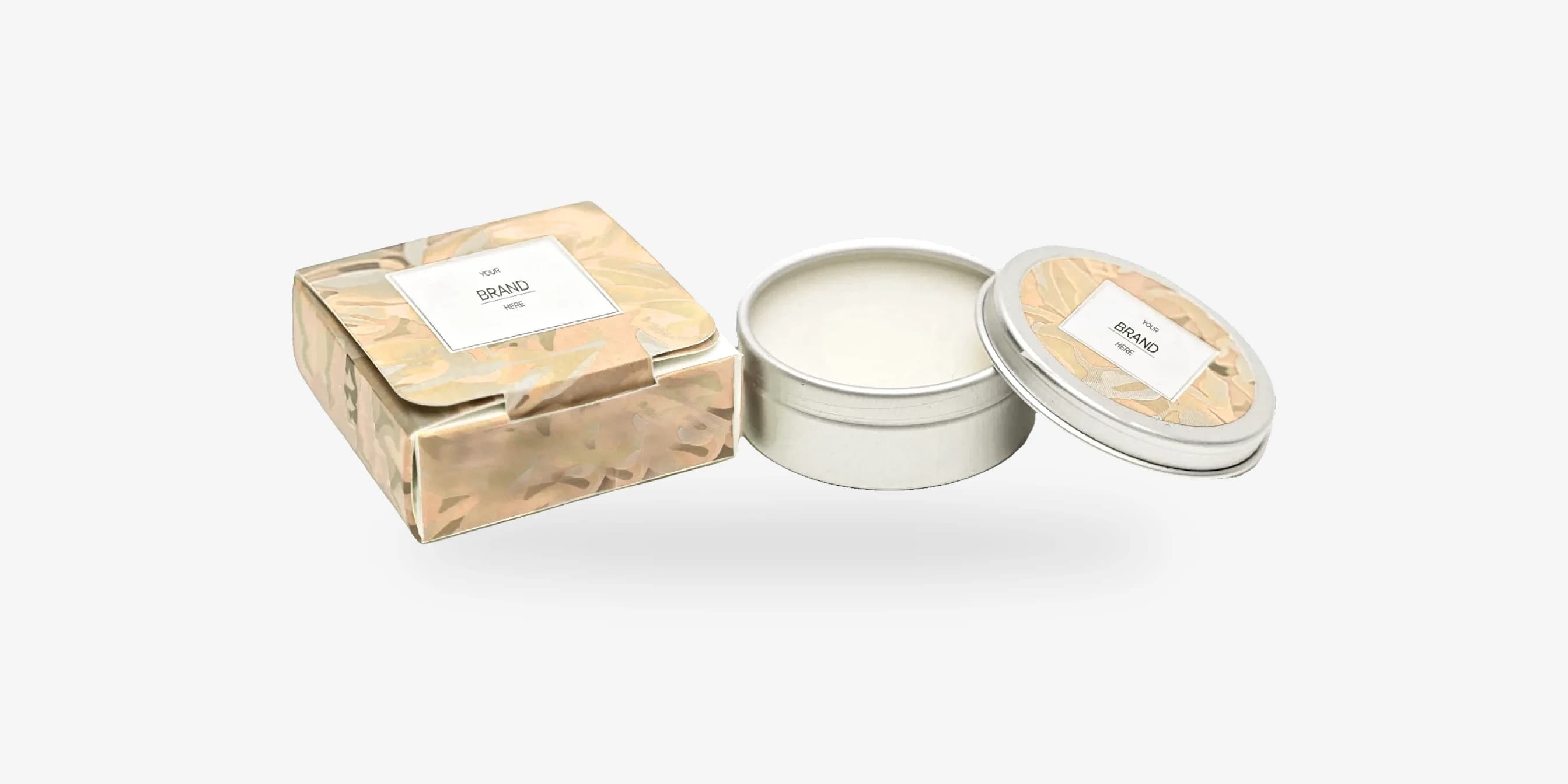
solide perfume private label

And ecological

Practical

Solid perfumes: an ecological and practical alternative

Do you like to wear perfume, but are you looking for a solution that is more environmentally friendly and easier to transport? Then solid perfumes are made for you! These scented balms, which have existed since Antiquity, are composed of natural materials and offer a wide range of scents. Discover the benefits and characteristics of these perfumes like no other.

What is solid perfume?

A solid perfume, also called perfume concrete, is a balm that contains essential oils and/or plant extracts, as well as a fat such as cocoa butter, shea butter or beeswax. It comes in the form of a small pot, a stick or a pendant, which you can slip into your bag or pocket. To perfume yourself, simply rub the balm on the skin, in the places where you want to smell good. The ideal is to target pulsation zones. These are the areas where heat circulates the most, such as the neck, the nape of the neck, the wrists or the crooks of the elbows.

What are the advantages of a solid perfume?

Solid perfumes have many advantages over liquid perfumes. They are :

  • Often more ecological: they are made from natural ingredients and do not contain preservatives, colorings or chemicals, apart from those contained in the perfume concentrate. Compact and space-saving, solid perfumes require fewer raw materials and less packaging than traditional eau de toilette, which significantly reduces their carbon footprint and packaging waste.
  • More practical: they are easy to transport, without risk of leaking or breakage. They are suitable for air travel, as they are not subject to liquid restrictions. They are discreet because they do not leave marks on clothes or hair.
  • More respectful of the skin: they do not contain alcohol which can dry out the skin. They are sometimes enriched with cocoa butter, shea butter or beeswax, which have moisturizing, nourishing and protective properties.
    Solid perfumes are therefore an ecological and practical alternative to liquid perfumes, which are attracting more and more perfume lovers. They allow you to perfume yourself in a natural, lasting and original way. They are also a way to express your personality and your mood, by choosing the perfume that suits you best.

TRUST US WITH THE MANUFACTURE OF YOUR SOLID PERFUMES

solide perfume private label

Opt for the full service: personalized Grasse perfume, wide choice of containers, finishes and French manufacturing.

We are here to listen to you >

How to choose your solid perfume?

The choice of a solid perfume depends on several criteria, such as:

  • The composition: it is important to check the list of ingredients, to avoid allergenic or irritating substances if you are concerned. It is preferable to favor solid perfumes ensuring good traceability of raw materials.
  • Scent: there is a wide variety of solid perfumes, which can be classified into different olfactory families, such as floral, oriental, woody, citrus, chypre, fern and aromatic. You have to choose the solid perfume that matches your tastes, your style and your mood. It is possible to test a solid perfume by applying it to the wrist or elbow, and letting it evolve for a few minutes. It should also be taken into account that solid perfume can react differently depending on skin type, pH or body temperature. When it comes to trying a solid perfume, there is little difference from an eau de toilette.
  • The brand: there are many brands that offer solid perfumes, some more well-known than others. You need to find out about the reputation, ethics and values of the brand, to ensure that they are consistent with your positioning. It is also necessary to check customer reviews, which can give indications on the quality, staying power and loyalty of the solid perfume.

How to preserve your solid perfume?

Solid perfume should be stored or stored in a dry, temperate place away from light, to prevent it from melting, oxidizing or losing its intensity. Also remember to close the container correctly, to prevent the solid perfume from drying out or being altered. If you are designing solid perfumes, be especially careful about storage.

The basics of body perfume

perfume expert advice

Solide perfume

Eau de toilette

The basics of body perfume

The world of perfume is full of terms that are often misunderstood by the public. The names may seem confusing to the uninitiated. These names are divided between terms defining the percentage of perfume for a finished product and terms defining the material constituting the solution.

Eau de toilette, eau de Cologne, eau de parfum…. What a difference ?

Scented body products have different names depending on their fragrance content. An eau de parfum is similar to an eau de toilette but in a more concentrated version. This difference in concentration is the cause of the price difference observed between these 2 products.


The exact concentration per product is as follows:

  • Pillow mist 1 to 3%
  • Eau de Cologne 3 to 5%
  • Toilet water 5 to 15%
  • Eau de parfum 15 to 20%
  • Perfume 20 to 40%
    A higher concentration allows the product to last longer but involves additional cost.

TRUST US WITH THE MANUFACTURING OF YOUR EAUX DE TOILETTE

spray 100ml 50ml ref.509 ref.510 with caps ref.1015 ref.1016 1

Opt for the full service: personalized Grasse perfume, wide choice of bottles, caps, and French manufacturing.

We are here to listen to you >

Alcoholic base, aqueous base, what’s the difference?

To dilute the ingredients making up a perfume, a liquid is used, it is called a solvent.
This solvent can be water or alcohol.
These solvents meet different needs
Alcoholic solutions are used to give lightness to the perfume. They evaporate more quickly than aqueous bases.
Aqueous solutions are used to prevent the perfume from evaporating too quickly. They allow you to give intensity to a creation. These solutions give greater density to a perfume. The choice of an aqueous solution can also be motivated by the refusal to use alcohol. Whether from a CSR perspective, or for community reasons.
The choice of solvent therefore depends on both a technical need and a commercial need.
There is another type of product that can be created with or without alcohol to perfume the body.
This is solid perfume. For more details on solid perfume, see our dedicated article.

Contacts